
How to Turn Your Skills Into an Online Business
(Even If You’re Starting From Scratch)
⚡ Quick Summary
If you’re navigating a career change and wondering how to turn your skills into an online business, this guide gives you a concrete, four-step blueprint. You’ll learn how to identify a profitable niche from your existing experience, build a lean website, create content that ranks and converts, and add income streams from day one — with a realistic timeline of 3–6 months to meaningful revenue.
You’re done. Done with the repetitive calls, the draining shifts, the slow erosion of watching your best work quietly build someone else’s future. That feeling isn’t weakness — it’s a signal.
Here’s what most people navigating a career change never stop long enough to realise: the skills that kept you in that room are the exact foundation the online world rewards. Reading people quickly. Communicating under pressure. Understanding what someone needs before they can articulate it themselves. These are not soft skills — they’re high-value assets, and right now, there’s a growing audience actively searching for the insights only your experience can deliver.
The path from employed-and-frustrated to building something genuinely yours has never been more accessible. Lower platform costs, AI-assisted tools, and niche audiences that actively buy have removed the barriers that once made this feel impossible.
But accessible doesn’t mean effortless — and the obstacle most people hit first has nothing to do with technology or timing.
Why Your Professional Experience Is More Valuable Online Than You Think
Before we cover the four steps, it’s worth naming something most career-change articles skip entirely: you are not starting from zero. Years of absorbing the stress, communication breakdowns, and psychological weight of professional service work isn’t baggage to leave behind — it’s material. And real people are actively searching for what that experience taught you.
According to a 2025 Spiralytics report, 49% of expertise-driven creators earn primarily through consulting and direct advice. Authority built on real experience compounds in ways that borrowed knowledge simply cannot. That’s not a starting point — that’s an edge.
The #1 Mistake New Online Business Owners Make (And How to Avoid It)
The obstacle that stops most people isn’t the market — it’s their own mind. A 2026 LinkedIn analysis found that nearly 90% of new content creators quit within their first year, not because audiences rejected them, but because they rejected themselves before they ever truly began.
The pattern is painfully familiar: waiting for the website to feel right, the niche to feel certain, the first piece of content to feel worthy. One more tweak. One more research session. Permanent almost-ready.
Why Perfectionism Kills More Online Businesses Than Poor Strategy
The individuals who achieve success online aren’t necessarily more talented or better prepared. They are willing to be imperfect in public. They begin before they feel ready, and allow the process to teach them lessons that no amount of planning could provide.
🔑 The business that launches messy and iterates will always outlast the one still waiting to be perfect. That truth leads directly to the first decision that shapes everything else.
Step 1: How to Choose a Profitable Niche Using Your Career Experience
The most durable online businesses aren’t built on trends someone spotted. They’re built on the lived intersection of what you already understand and what a specific audience is quietly desperate to find.
For someone navigating a career transition, that intersection runs deeper than it first appears. Years of experience in service environments, high-pressure communication, or specialist knowledge represent an authentic perspective that algorithm-trained content simply cannot replicate.
Validating Your Niche: How to Use Keyword Research Before You Build
Validate before you build. Keyword tools can surface search terms with genuine monthly demand and manageable competition — phrases like “career transition strategies for professionals” or “how to manage workplace burnout” signal audiences in active motion, not passive scrolling.
The goal is to find the intersection of: (a) what you genuinely understand from lived experience, (b) what a defined audience is actively searching for, and (c) where current content is thin, outdated, or impersonal. That overlap is your niche. Once you know where you stand, the next move is simpler than most people expect.
Step 2: Build a Simple Website That Converts — Without Overthinking It
The website is not the business. It’s the address. It doesn’t need to be beautiful — it needs to be honest and clear.
A single-page WordPress or Substack site, live within 24 hours from a basic template, will do more for your momentum than an elaborate build still labelled ‘coming soon’ three weeks from now.
What Your Website Needs on Day One (And What Can Wait)
A conversion study by Amra & Elma (2025) found that pages with 40 or more elements convert at less than half the rate of pages with fewer than 10. Simplicity isn’t a compromise — it’s a decision.
One clear offer that answers a specific reader need
One obvious way to connect or subscribe
One place to begin — no decision paralysis
Build the rest once real readers tell you — through their behaviour — exactly what they need next.
Step 3: Create a Content Strategy That Attracts Buyers, Not Just Browsers
Publishing without a strategy is shouting into a crowd and hoping the right person turns around. The approach that consistently cuts through is content clustering — long-form pillar pieces of 3,000+ words anchored around your core topic, supported by shorter related content that draws readers deeper into your expertise.
Content Clustering: The SEO Method That Drives 40% More Organic Traffic
A December 2024 LinkedIn analysis by Yeasitech found that content clustering drives an average 40% increase in organic traffic, with HubSpot reporting improved rankings for 80% of targeted keywords through the same method. The structure is only half of it.
What turns useful content into content people trust — and share, and return to — is the unmistakable presence of someone who has actually lived the problem. A piece on managing workplace stress written from the inside reads nothing like one assembled from research alone. Your perspective isn’t a nice addition. It’s the reason someone chooses your work over everything else ranking beside it.
📊 Write for the reader who is actively searching for relief, not the one casually browsing. That reader is ready — and when they arrive, your income infrastructure should already be in place.
Step 4: Add Income Streams From Day One — Even Before You Have an Audience
There’s a widely held myth worth dismantling early: that monetisation is something you graduate into after earning your audience’s trust over months. In practice, the infrastructure for generating income can — and should — exist before your first piece of content goes live.
Affiliate Marketing vs Digital Products: Which Should You Start With?
Affiliate programmes on platforms like WarriorPlus and Gumroad cost nothing to join. You recommend products you genuinely stand behind, earn commission when your readers act, and maintain alignment between your content and your offers — keeping trust intact.
For higher margins, digital products are the sharpest tool available. A focused guide on a practical creative skill — drawn from knowledge you already carry — requires no inventory, scales without friction, and sells directly to the email list you start building from day one.
That list is the compounding asset that makes everything else sustainable.
📈 Real-world benchmark: Starting from zero in July 2016, posting two to three focused articles per week, one affiliate marketer reached $500/month after twelve months — no paid ads, no overnight breakthrough. Just consistent work and a clear niche. (Wealthy Affiliate case study)
Realistic Timeline: What to Expect in Your First 3–6 Months
Here’s what building an online business from your professional skills actually looks like from the inside: quiet for longer than you’d like, then steadily, unmistakably better.
Publishing two to four pieces per week — with AI tools helping carry the production load — puts a realistic target of three to six months to meaningful monthly revenue well within reach. Not guaranteed. Not instant. But real, and earned.
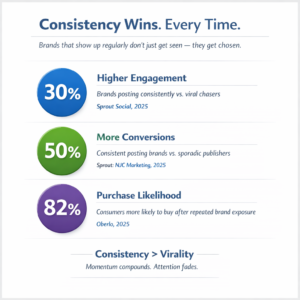
There will be weeks where the effort and the numbers feel completely, frustratingly disconnected. There will be pieces that land in silence. None of that is the story ending — it’s the story in progress.
Virality is a lottery with terrible odds. Consistency is a strategy with a track record.
Your Career Experience Is Your Competitive Edge — Start Using It
The career you’re leaving gave you something most people building online businesses are still trying to develop: a hard-won tolerance for difficulty, and a precise, human understanding of what a certain kind of person genuinely needs.
That’s not a starting point. That’s an edge. Build from it. The business follows. ..but before you can monetize those skills, you must first navigate the challenge of choosing a niche when you have too many ideas to ensure your offer hits the mark.