
The Myth of the Expensive Entry Fee
You open YouTube, looking for a roadmap, only to find creators flaunting high-end setups that cost more than your monthly rent. Between the Kajabi subscriptions, ClickFunnels accounts, and premium email platforms, it feels like the entry fee for an online presence is reserved for the already wealthy. You start to believe that unless you can drop hundreds of pounds a month on a ‘pro’ stack, you simply aren’t in the game. This is the budget paralysis that kills most ideas before they even launch. The assumption that you need these specific tools to run an online business successfully before you have made a single penny is a myth that needs to be named. It’s time to stop scrolling and start building without the financial dread.
Choosing Function Over Professionalism
Here is the reality that the shiny sales pages won’t tell you: the most successful early-stage online businesses weren’t built on thousand-dollar tech stacks. They were built on scrappy systems and free plans. There is a massive difference between a ‘professional’ stack and a ‘functional’ one. A professional stack costs you money before you have even validated your idea; a functional one gets you to your first sale so you can upgrade from a position of strength, not desperation. Choosing free tools to run an online business isn’t about being cheap—it’s about being disciplined. It is the smartest way to protect your margins while you find your feet, ensuring that your first pound of profit actually stays in your pocket.
The All-In-One Infrastructure: Systeme.io
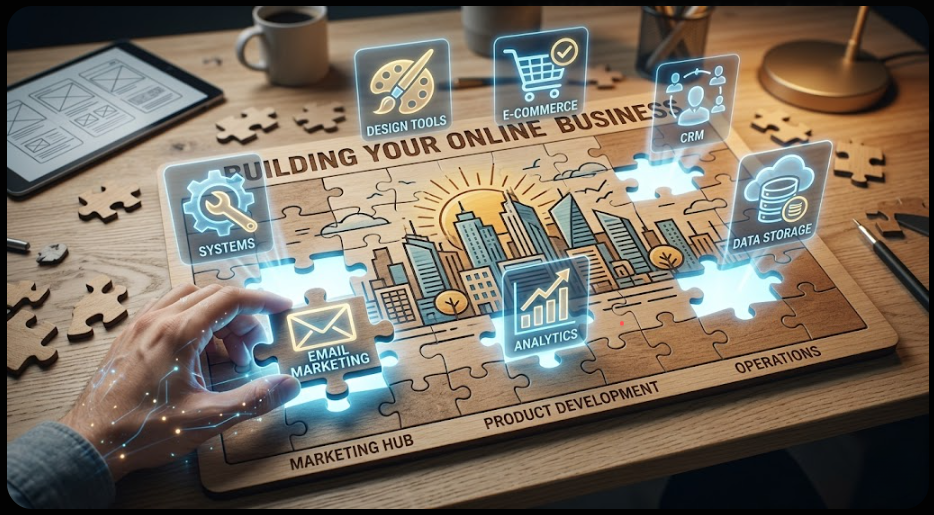
When I was first navigating the maze of tools to run an online business, I felt like I was playing a losing game of subscription Tetris. I needed an email list, a landing page, and a way to host a digital course, but the combined cost was eye-watering. That is when I found Systeme.io, and it genuinely changed the trajectory of my startup phase.
Instead of juggling five different platforms, I found one that handles my entire sales funnel, email automation, and product delivery under one roof. The best part? Their free plan is not some stripped-back trial; it is a permanent infrastructure that allows for up to 2,000 contacts and unlimited emails. I personally used it to build out my first lead magnets and sales sequences without ever reaching for my credit card. It replaces the need for expensive alternatives like ClickFunnels or Mailchimp, giving you a ‘pro’ setup for the grand total of zero pounds. For me, it wasn’t just about saving money—it was about the mental clarity of having one reliable dashboard where everything actually talks to each other.
Polishing Your Presence with a Supporting Stack
Once your core infrastructure is set, you need visuals that match your professional ambition. Canva is the definitive choice for non-designers, offering a free plan that covers every social post, featured image, and brand asset you will need. Its drag-and-drop interface means you can produce high-quality graphics with zero previous experience, ensuring your brand looks established from the very first day.
If your background is in corporate communication rather than marketing, writing copy can feel intimidating. Grammarly provides the confidence you need by acting as a silent editor. The free version identifies typos, unclear sentences, and tone inconsistencies that might undermine your authority, helping you transition from writing internal emails to writing persuasive marketing content that converts.
While all-in-one platforms are excellent for funnels, a dedicated website remains your primary digital real estate. For reliable hosting that fits a startup budget, ChemiCloud is my top recommendation. It provides the speed and uptime necessary for a growing business without the enterprise-level price tag, focusing on the essential features you actually need to get your site live and keep it running smoothly.
Finally, you cannot improve what you cannot measure. Integrating Google Analytics into your workflow is a non-negotiable step for anyone selecting tools to run an online business. It is a completely free way to track exactly who is visiting your site and how they found you, allowing you to make data-driven decisions based on evidence rather than guesswork.
When to Outgrow Your Free Plan
While these are the best free tools to run an online business, we need to be honest about the boundaries. Every free plan has a ceiling. Systeme.io caps your list at 2,000 contacts, Canva restricts some premium elements, and Grammarly limits its more advanced stylistic suggestions. However, these constraints are not hurdles—they are milestones.
The goal was never to stay on a free plan forever; the goal was to ensure your business earns its first pound before you spend your first pound on software. When you finally hit that 2,000-contact limit on Systeme.io, you aren’t just hitting a restriction—you are proving that you have built something worth paying for. At that stage, an upgrade isn’t an aspirational expense; it is a revenue-justified investment. Starting free isn’t about staying small; it is about building a foundation so solid that your future upgrades are funded by your success, not your savings.
What is Your Next Step?
Building an online business is a series of small, disciplined choices rather than one grand, expensive gesture. By selecting the right tools to run an online business from the start, you protect your focus and your finances until your revenue can support the bigger bells and whistles. I am curious—are you currently feeling the weight of a subscription stack you haven’t quite outgrown yet, or are you just starting to piece together your first functional setup?
Your possible first step could be How to Choose a Niche When You Have Too Many Ideas
Disclosure: This article contains affiliate links. If you click through and make a purchase, I may earn a small commission at no extra cost to you. I only recommend tools and services I have personally used and genuinely believe in.